
Energy is kind of the most important thing in the human body. Humans are like big, giant electric cars, and we have to constantly charge our batteries (ATP) by eating, drinking water, getting sun, and sleeping (some argue social connection does this as well). If we don’t charge our batteries, we die.
The process by which our bodies replenish their energy is called metabolism, and several cellular reaction pathways that create energy for different tasks. If these energy pathways don’t function well, energy production will be very expensive, and you will probably have low energy or “bad” energy, which can be an indicator that your health span (ability to do stuff during your life) will be short.
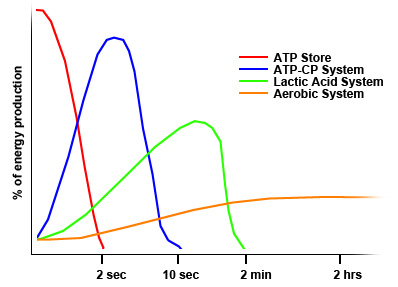
To get an understanding of how these energy systems work, we are going to look at a practical example. Imagine you’re on a bike ride with your best friend to meet a third friend for coffee. The coffee shop is about five miles away, with a few changes in terrain along the way. You regularly train energy systems (also called metabolic conditioning) as part of your workouts, but your best friend is sedentary and hasn’t ridden a bike in over five years.
As you set off, you maintain a relaxed pace at about ten to twelve miles per hour on flat pavement. For you, this is entirely aerobic; your heart rate is low (zone 1), and you can easily chat. Your friend, on the other hand, is keeping up but breathing harder, and you notice their sentences getting shorter. They’re already working closer to their aerobic threshold (the top of zone 2), where their body starts relying more on anaerobic metabolism to keep going.
Then you realize you’re running late and pick up the pace to around sixteen miles per hour. You still feel in control, though talking requires slightly more effort (you are now in zone 2). Your friend, however, has fallen behind. When you yell clear after passing through a stop sign, they can only muster a wave. At this point, your aerobic system is still dominant, efficiently fueling your effort, but your friend is increasingly tapping into anaerobic glycolysis (aka the lactate threshold), a more demanding energy system that burns through carbohydrates faster and generates metabolic by-products like lactate.
As the light turns yellow, you decide to sprint through. For these few seconds, you’re using the phosphocreatine system (zone 5), which provides rapid energy for explosive efforts of under fifteen seconds. You clear the intersection and look back, seeing that your friend only had enough left in the tank to reach the median. They give you a thumbs-up, but they’re visibly out of breath. As you slow down to recover, your heart rate quickly returns to baseline, thanks to your well-trained aerobic system. When your friend catches up, they’re still struggling to talk, taking longer to bring their heart rate and breathing under control.
You’re almost at the coffee shop, but first, you have to cross a steep bridge. You push into the pedals, maintaining a steady power output. This effort still relies on your aerobic system, but now anaerobic glycolysis (lactate threshold) is kicking in to provide additional fuel, causing a mild burn in your legs. Your friend, however, doesn’t make it all the way up; they dismount about halfway and start pushing their bike. The increasing energy demand has caught up with them.
By the time your friend reaches the top, they’re heavily fatigued, drenched in sweat, and needing a longer break. After nearly ten minutes, you both coast down the other side toward the coffee shop. As you park your bikes and place your orders, you feel back to normal, fully recovered. Your friend, on the other hand, is still breathing heavily, likely burning a higher percentage of carbohydrates than you, given your more efficient reliance on fat oxidation from aerobic conditioning. After the coffee shop, you continue on with your day, your friend on the other hand, is smoked and can’t do anything else.
The point of this story is: Your body’s ability to efficiently generate and use energy is a key marker of health and performance. The more aerobically fit you are, the more effectively you recover between efforts, delay fatigue, and rely on sustainable energy sources. Conversely, when someone is deconditioned—or dealing with metabolic, cardiovascular, or pulmonary disease—their body struggles to supply oxygen efficiently, making even moderate activity feel disproportionately hard. Over time, these inefficiencies place stress on vital systems, reducing function and increasing long-term health risks.
Regardless of whether you’re a competitive athlete or just someone looking to stay healthy for life, building a robust aerobic system is essential, it’s what keeps you moving longer, recovering faster, and staying resilient in the face of life’s physical demands.
I’ll make one final point here about aerobic health and energy delivery in general. These things work on a sliding scale. Here I compared you to a friend in this story who wasn’t aerobically conditioned enough to keep up with you on a bike ride, but de-conditioning of these energy systems can slide all the way down to daily tasks like walking up stairs, becoming what seem like physical fitness challenges. These things tend to sneak up on us until we run out of compensatory strategies. If you’re not sure what to look for or don’t have good systems of measurement and maintenance, health malfunctions can occur in what seems like a sudden chain of events. This leads to a point where your ATP batteries can no longer recharge, and you must enter assisted living or die.
So how do you know if your body is GOOD at making energy?
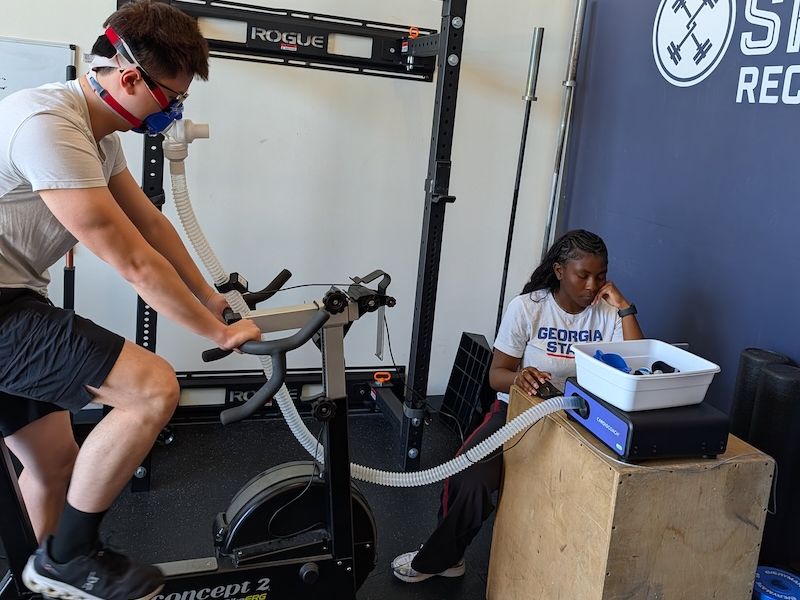
Easy! Get a VO2 max test with me at ASR. The VO2 Max test is the clinical gold standard for measuring your body’s energy systems. The test provides valuable insights into how fit your energy systems are and what you need to do to help you live a long, full life.
See A Sample Of An ASR VO2 Max Report
The test can be done walking, running, or biking, and it doesn’t suck at all, and can give you dramatic insights into what’s going on under the hood in your body.
The bike example in this article was created by brilliant coach and therapist Rob Wilson, it’s so good I used it for this article.