


The point of all workouts and training is to place a specific, intentional kind of stress on your body and brain, then let it recover and adapt to that stress, so you can adapt to the same stressors without causing the same sort of damage to your body. The key thing here is that your body actually ABSORBS the training/exercise. If your body is overloaded and does not absorb it, you will just accumulate fatigue, and over time, you will break down.
In plain English: your body should be able to take the work, recover from it, and then show some sign that the same workload is becoming easier or that a higher workload is becoming possible.
The classic example of athletes not absorbing training is runners who make it their mission to run 50-70 miles a week because that is what the internet says they should do, but don’t actually monitor whether their bodies can process all that training. Oftentimes, by race day, they are not even able to run as fast as they did at the start of the training block, because they didn’t absorb the training stress.
In my 10+ years of practice, I have noticed that people often miss the obvious signs that they are not absorbing their training, which can lead to injuries such as tendinopathies, strains, and bone stress injuries.
So this week, I wanted to share 5 signs that you ARE absorbing your training, along with a simple checklist to use (especially for endurance athletes and high school track and cross-country athletes) to see if you are absorbing workouts.
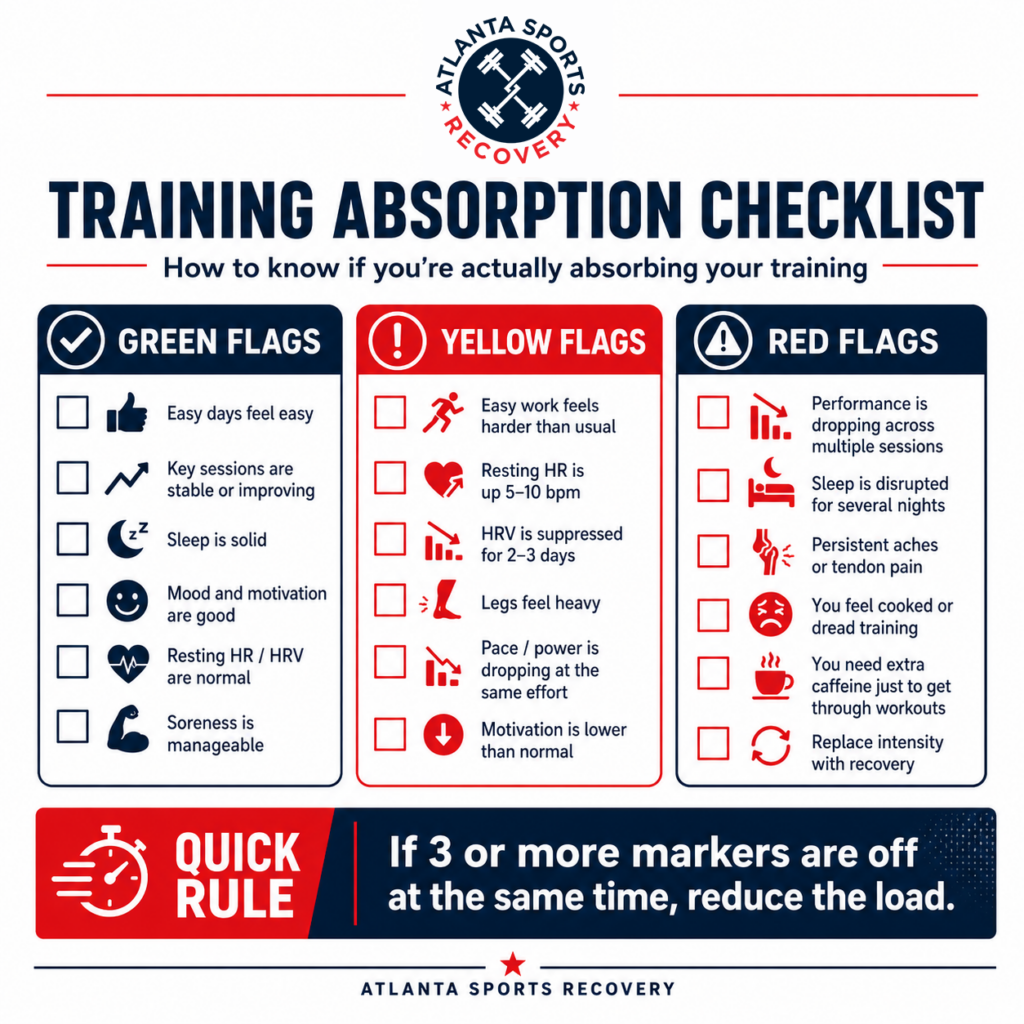
- Performance is Stable or Improving – For endurance athletes, this means the same power/pace at a lower heart rate, no cardiac drift during workouts, and long runs don’t feel long. For CrossFitters/lifters, it looks like the same weights moving faster, more reps at the same load, less soreness after repeated workouts, better repeatability of hard efforts, and gymnastic skills not falling apart under fatigue.
- Easy Days Actually Feel Easy – Low mental stress, finishing the effort, and feeling like you could have done way more are the cardinal signs of this check mark.
- Resting Heart Rate and HRV – If your resting HR is the same or lower after a hard workout/week, if your HRV trends back up the days after a hard workout, then you are absorbing your workouts.
- Sleep & Mood – If you fall asleep normally, stay asleep, your mood is good, and your motivation is high, you wake up with morning wood and you are not emotionally unstable, you are absorbing your workouts (and life stress).
- Can You Reliably Hit Your Numbers In Hard Sessions? If you are supposed to run 10 miles at your tempo pace and can do it, you are good. If you are supposed to clean and jerk 90% of your max and can, you are good. If you are supposed to finish 100 Burpees & 100 Wall Balls in under 12 minutes and can, you are absorbing training.
If 3/5 of these metrics are off, it’s a good indicator you are not recovered and need to back off intensity in your workouts and volume, and replace them with easy aerobic sessions until your data points return to normal.
If this all seems like way too much data and thinking for you, I totally understand. It’s a lot, but if you train hard, work hard, have a busy life and care about your body, it’s critical to pay attention to these things, or you will end up in our office.
A good way to not have to worry about this while still keeping an eye on it is to become an ASR RPM member. It’s the ultimate self-care for people who care about their bodies like an athlete. At each monthly session, we will review data points like this to make sure we are preventing injuries, not just playing whack-a-mole when they pop up.
If you are interested in learning more about the RPM, check out the link below.